USA & Canada: Moving from Manual to Semi Automatic Weigh Packing – Cost & Payback
North American producers are under pressure. Tight labor markets, rising material costs, and stricter QA demands are squeezing margins across fresh produce, convenience foods, and multi‑ingredient kits.
Moving from manual to semi‑automatic weigh‑packing is one of the fastest, most measurable ways to recover margin – by cutting labor, reducing giveaway, and increasing first‑time‑right pack accuracy.
MARCO’s semi‑automatic solutions have been deployed across the US & Canada and are supported by our North American Sales & Service hub (Las Vegas, NV), making adoption practical and low‑risk for plants from California to Ontario.
Why move now?
Manual weighing depends on operator judgment and constant supervision. It tends to drive overpack, rework, and training overheads, each a direct hit to gross margin. Semi‑automatic weigh‑packing replaces guesswork with guided, visual cues and real‑time data:
- Giveaway reduction to <1% with MARCO’s traffic‑light guidance and Yield Control software, cutting material loss while lifting consistency.
- Labor reductions of up to 50%, depending on your process: from semi‑automatic lines that replace manual handling to 12‑head combination scales that consolidate tasks.
- Actionable line analytics via MARCO Software Modules, giving visibility to yield, operator performance, and compliance so teams make in‑shift decisions instead of post‑mortems.
What “semi‑automatic” looks like on the floor?
Semi‑automatic doesn’t mean ripping out your line. It means adding smart, guided hardware and software where manual steps drive waste or cost.
Takeaway Scales: guided portioning at the line with language‑neutral LEDs; integrates with MARCO Software for real‑time data; proven to cut labor by up to 30% in high‑mix environments.
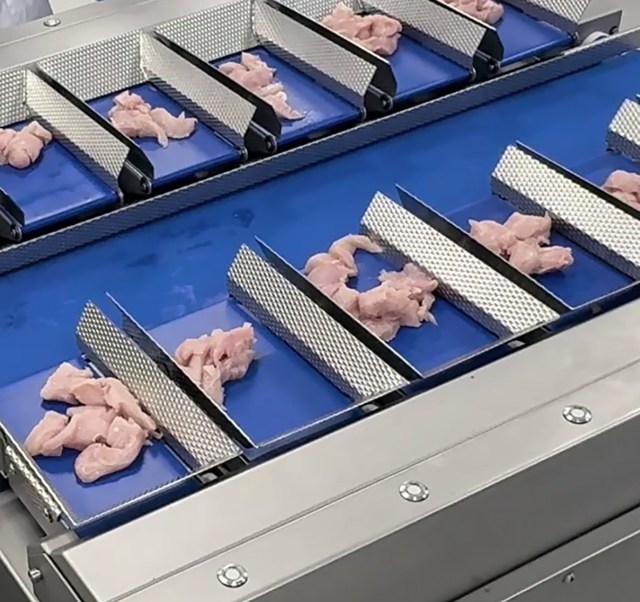
Combination Weighing: a semi‑automatic 12‑head combination weigher that delivers ±1g accuracy per channel, tool‑less changeovers, and ROI in 12–18 months through efficiency gains.
Semi‑Automatic Packing Lines (e.g., grapes, tomatoes): automated raw‑material feed and empty‑box return, dynamic weighing, multi‑point QA, and end‑to‑end diagnostics – roughly 20% fewer operators vs. traditional lines.
Why it matters: Many plants begin by instrumenting their existing manual stations, then add semi‑automatic modules (e.g., Combination Scales) and, where throughput demands it, upgrade to a semi‑automatic line layout. That phased path reduces change‑management risk while compounding savings.
Sales and Service in Canada and USA
2037 East Maule Ave, Las Vegas, NV 89119, USA